It’s been an incredible time, blessed, bittersweet. And so I find a moment for some moral and existential open-book auditing, something that marks out my LiveJournal generation more than any that’ll come after (less than 1 in 5 young people now choose to read). So to it.
Business first. A long read for The Conversation on the future of English farming, based on interviews undertaken last autumn and winter. Most politics and philosophy are shorn off in the edit, and there’s more to say, and so I shall find a place. Still, it captures the state of play and some memorable characters I had the pleasure of spending time with.
And a dry but politically provocative intervention into social policy on adult social care and unpaid carers. A co-authored systematic review, based on three years’ work, open access here. It finds that social care policy is incoherent, governments have paid lip service to unpaid carers and charts 15 years of policy failure. Rather than setting out some seemingly pragmatic, modest policy recommendations that the Treasury will never fund, the key question it asks is: why does the status quo persist? I also lead co-edited a special issue on care, poverty and inequalities – the introduction sets it out, and there’s lots of good papers there.
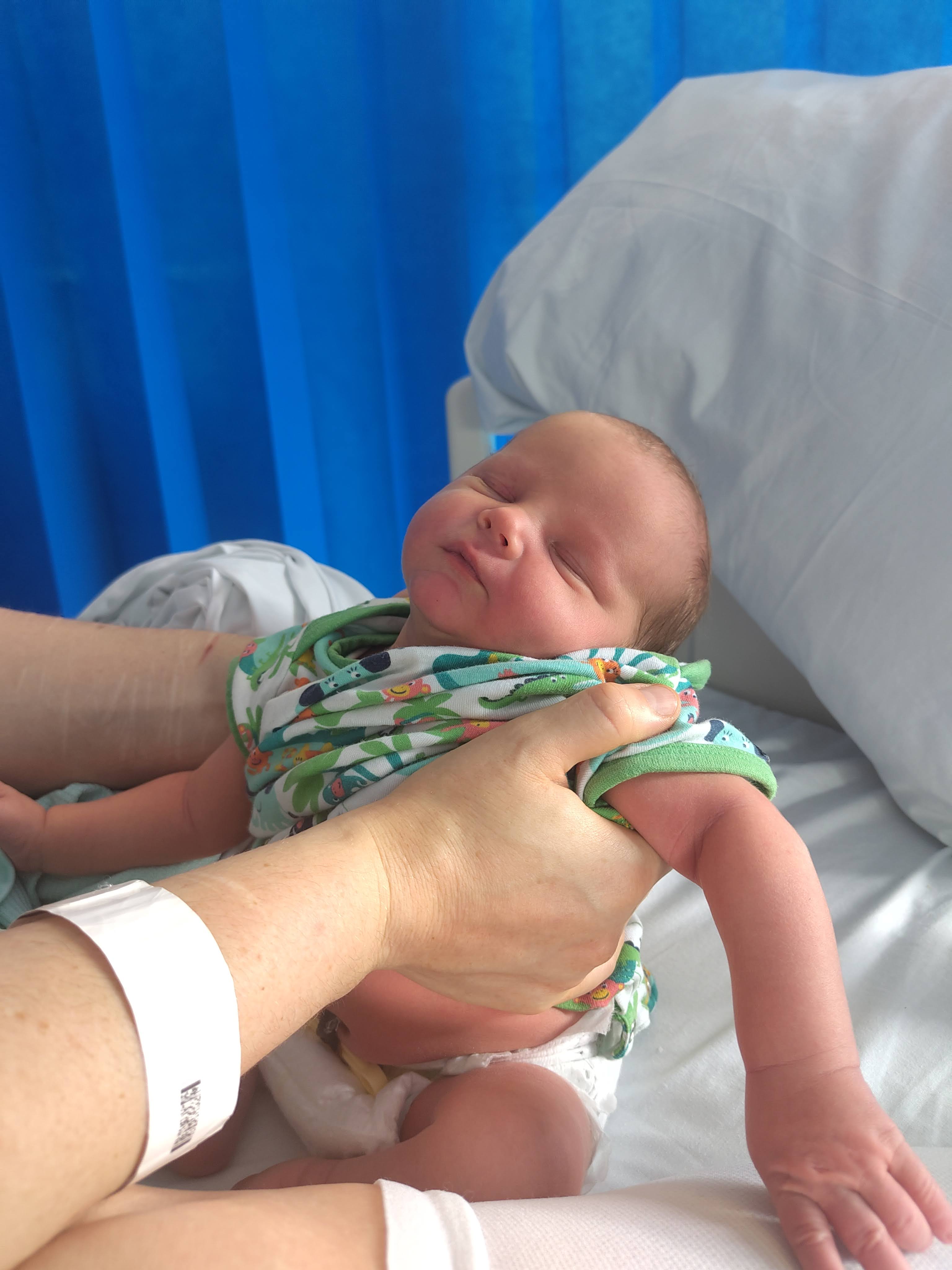
And then, just as I was immersed in all these questions of care in the abstract, of community and Fen Power, little Lev arrived.
Baby Lev was born just over three months ago. Here’s a nugget from a memo I wrote late at night, which captures some of the madness of the early days:
“He’s now 2.5 weeks old. It’s felt like 3-4 times as long. Transfixed on his impossible and ever changing face. Addicted to eavesdropping on his gentle panting breath. The first few days are a time of incredible love, like a romance, seeing the world in a new way through being transfixed on this beautiful and incredibly tiny (yet strangely large) life. I had forgotten what the sleepless nights meant. They mean staying up til 4am every night in order to hold the baby so Vera can get 2-3 hours of interrupted sleep, as that’s how often he feeds. Sometimes I can stretch it to 4 by gently rocking him.
The first week threw me like an angry mother goose into wanting to shoo everyone out of our home and protecting the core family unit. … We do not call him Lev. We call him Lyova, and as often, little wriggler. … Yasha has taken it well and embraces being a brother. He has been curious and kind always, never complaining or lashing out at no longer being the centre of attention. It shows great maturity and he will be a kind brother. This is our unit now, and there’s bliss in that, bliss and levity…”
It has been a lot of that. Hours transfixed by the face of a tiny, unfamiliar animal, a face that resembles the world you will now inhabit, with its strange grimaces and mystic gurgles. But it’s also a time of loss, something I don’t hear people say much of. The first time round, in the late small hours, I often found myself having intense flashbacks from childhood, things long forgotten to remember, as I was now viewing my own child-state from the new perspective of a loving, exhausted parent. I saw the child in me through new eyes, a kind of Copernicanism, entailing a new truce with the person you are now. This time round, holding this tiny, improbable, beautiful boy in the late hours, I’d sometimes feel moments of quite acute dread: a deep and gnawing unease about the state of the world.
Exhaustion plays a part, of course. But perhaps becoming a parent again is to see the diminution of your own free trajectory, the recognition of your own failed ventures to a point and the prospect of never regaining the energy to accomplish them. The recognition that one is no longer plastic, sculptable, but moulded hard and dry by habit, personality, career drift. And then, far more importantly, and the tailing away of this young life whose projects and vanity and idealism you will now unquestionably support. It is his world. If I was religious, I would pray for it not damage his light, his goodness.
Then there are the other epiphanies. Like cycling down a familiar high street in sleep-deprived haze, momentarily seeing that everyone there was once a newborn, cradled in a loving parent’s arms. (I wish you could see this, even for a moment…). Or when Lev stares up at a sunflower and smiles. What does it mean? Does it even matter?!
In the small hours, I struggle to keep my eyes open, so I stare at the ceiling. The darkness above shimmers. Space becomes wider, momentarily; I’m conscious of something else there. In this fragile and vulnerable state, Lev and I, holding each other, we’re joined by others. I can’t put my finger on it, probably because it’s the froth of an exhausted, overexerted amygdala; or perhaps it reflects a fleeting porousness, a lucidity, into overlapping thresholds of experience. Either way…
Late night – for I spend many hours late at night holding this beautiful boy – I read a lot, and I listen to music in one headphone to stay awake. In this strange, fragile state, the words are harder to grasp but leave a subcutaneous impression, being too tired to critique them or pigeonhole them for some futile end. Above all, I loved reading Peter Reich’s A Book of Dreams, a very touching and elucidating book about childhood and fatherhood. Between the wet nappies and late night squats (the perfect way to get Lev back to sleep), I’ve ricocheted between reading Alastair McIntyre’s After Virtue, Marx’s Capital (read at last) and Jonathan Rose’s Intellectual History of the British Working Classes. I’ve enjoyed Rebanks’ English Pastoral, Pryor’s The Fens, Guilluy’s The Dispossessed, and Alec Nove’s The Economics of Feasible Socialism. And then a glut of other good stuff: Kae Tempest, Susan Stebbing, Paul Collier, John Berger, Danny Dorling, Ha-Joon Chang. Musical biographies when getting sleepier – Nileism (about the Blue Nile) and Under the Ivy (about Kate Bush). Continuing the long-term trend of only listening to music released between 1980 and 1989, I’ve had these two on compulsive repeat all summer (“eeyore!”).
A big thing for all of us was the passing of my Grandma Ruth, who had just made it past her 99th birthday but had suffered poor health since the start of this year. She was a truly wonderful woman. I was close to her throughout my life, and I had the honour of leading her memorial service. At some point, there’s a lot I’d like to return to and write about her. For now, just a line from Middlemarch, a book she loved, “the growing good of the world is partly dependent on unhistoric acts”. I think the partly is misplaced; kindness of an everyday, often hidden sort is the one true glue that keeps the possibility of goodness alive. And what’s wrong with dependency? To give and receive care is par for the (life-)course.
Well, Grandma scoffed at anything involving a fuss. (Though, she managed to stay still long enough for this documentary to be made about her life). She also had a dark sense of humour, reminding us of her impending dottiness and old age from when we were small children. Her gift is the imposition to go out now, return kindness, seed those small unhistoric acts of hidden generosity. Perhaps that’s led to some of the research I’ve since pursued, not just around unpaid care but also that of the regenerative power of connection, community, of gardens.
But that’s easier said than done. At some point in most conversations I’ve had in the last few years with people aged over 70 years old, be they carers, farmers, or neighbours in community halls, is the lament about a dire, broken world left to be figured out by the next sorry lot. I’ve meditated on this a good deal. It is the problem for which 250-odd interviews and a vast amount of reading and fieldwork across England had set out to solve. It stumbles beyond the broken bonds of current politics into existential and moral questions about what one interviewee called, after John the Apostle, “the bread of life”, or what Jerome gestured as the “supersubstantial”. More on this in due course.
Handwringing’s a waste of time. Head outside then, feel the autumn breeze (only you can). Here is Rainer Maria Rilke from the first of the Duino Elegies, a paean to the angels in our midst:
“Don’t you know yet? Fling the emptiness out of your arms
into the spaces we breathe; perhaps the birds
will feel the expanded air with more passionate flying.
Yes – the springtimes needed you. Often, a star
was waiting for you to notice it. A wave rolled toward you
out of the distant past, or as you walked
under an open window, a violin
yielded itself to your bearing. All this was mission.”
 Dan Taylor
Leave a comment